Every job below is one we do ourselves across Wheeling.
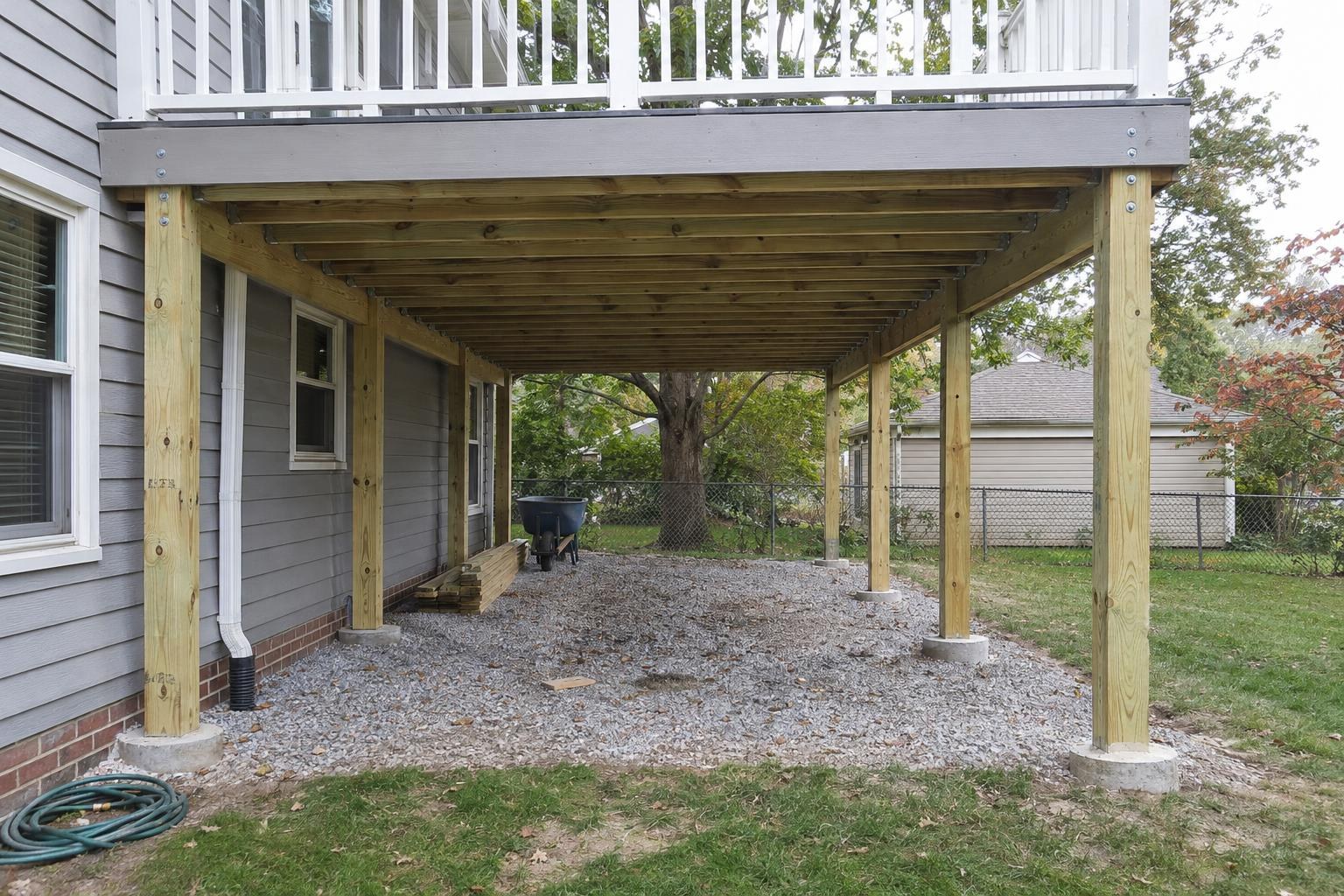
We frame new decks on concrete footings poured below the Illinois frost line, usually around 42 inches down, so the structure doesn't heave when the ground freezes. Framing is pressure-treated lumber with joist hangers and hot-dip galvanized or stainless fasteners. We'll walk you through decking material before any concrete gets poured, since that choice affects joist spacing.
A deck that bounces in the middle usually means a joist has rotted or a beam has shifted off its post. We pull up the boards around the problem spot, check how far the rot has spread, and sister new lumber to the old joist or replace it outright. Small repairs like a loose stair stringer or a popped fastener we can usually turn around in a day.
Gray, weathered wood gets stripped and sanded before any stain goes on, because sealing over dirt and old finish just means it peels again next spring. We use a penetrating oil-based stain on pressure-treated and cedar decks, not a film-forming paint that cracks and flakes. Plan on redoing this every two to three years depending on sun exposure.
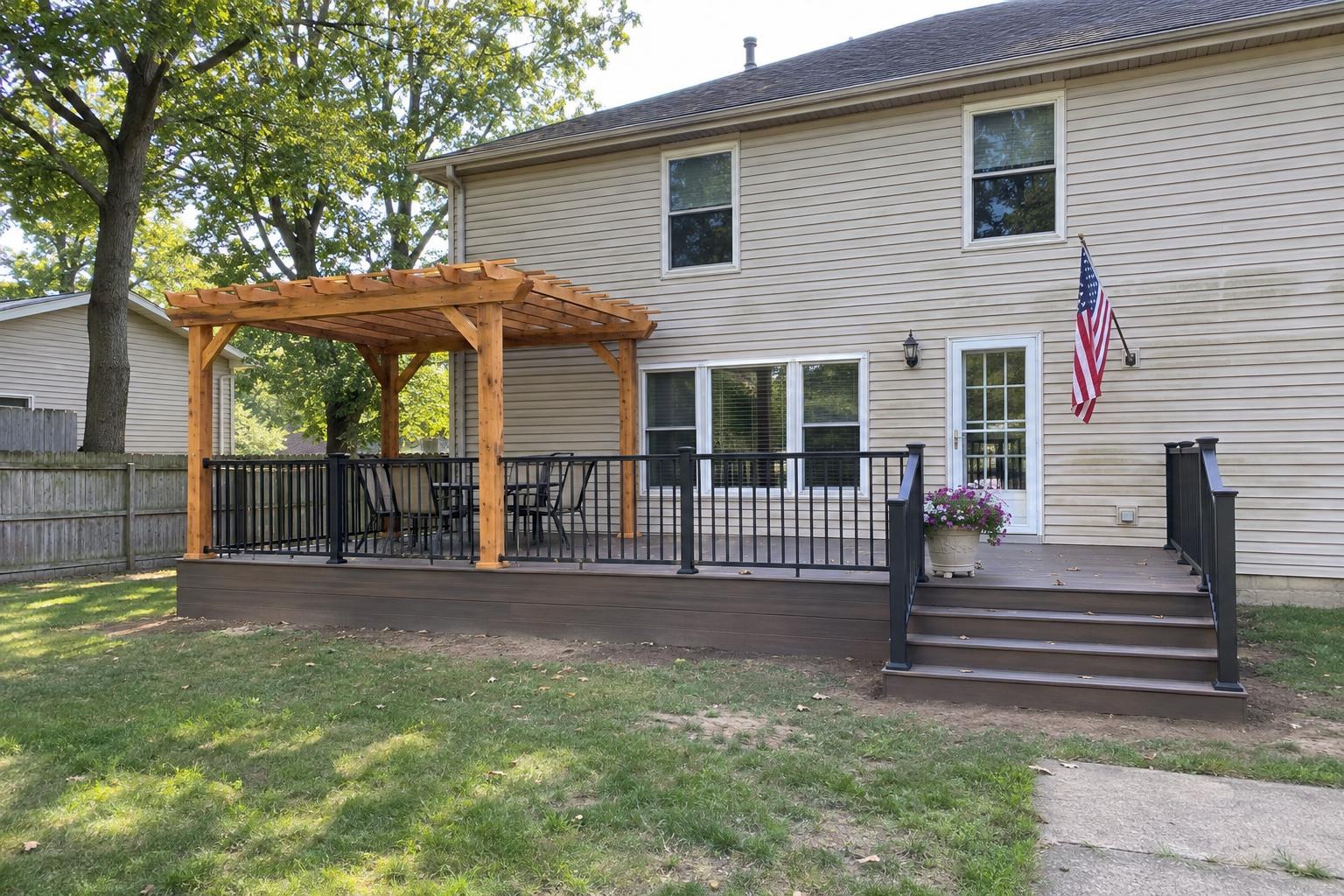
Multi-level layouts, built-in benches, pergolas, and curved rail sections all start as a sketch we walk through with you before any lumber gets ordered. We design around what your yard actually does with drainage and sun, not a stock plan. If your lot slopes toward the house, that changes where the footings go and how tall the first level sits.
Composite boards don't need staining and they won't splinter, but they cost more up front and the framing underneath still has to be pressure-treated lumber. We install hidden fastener systems on most composite jobs so you don't see screw heads across the whole deck. Board spacing still matters for drainage even though composite doesn't absorb water the way wood does.
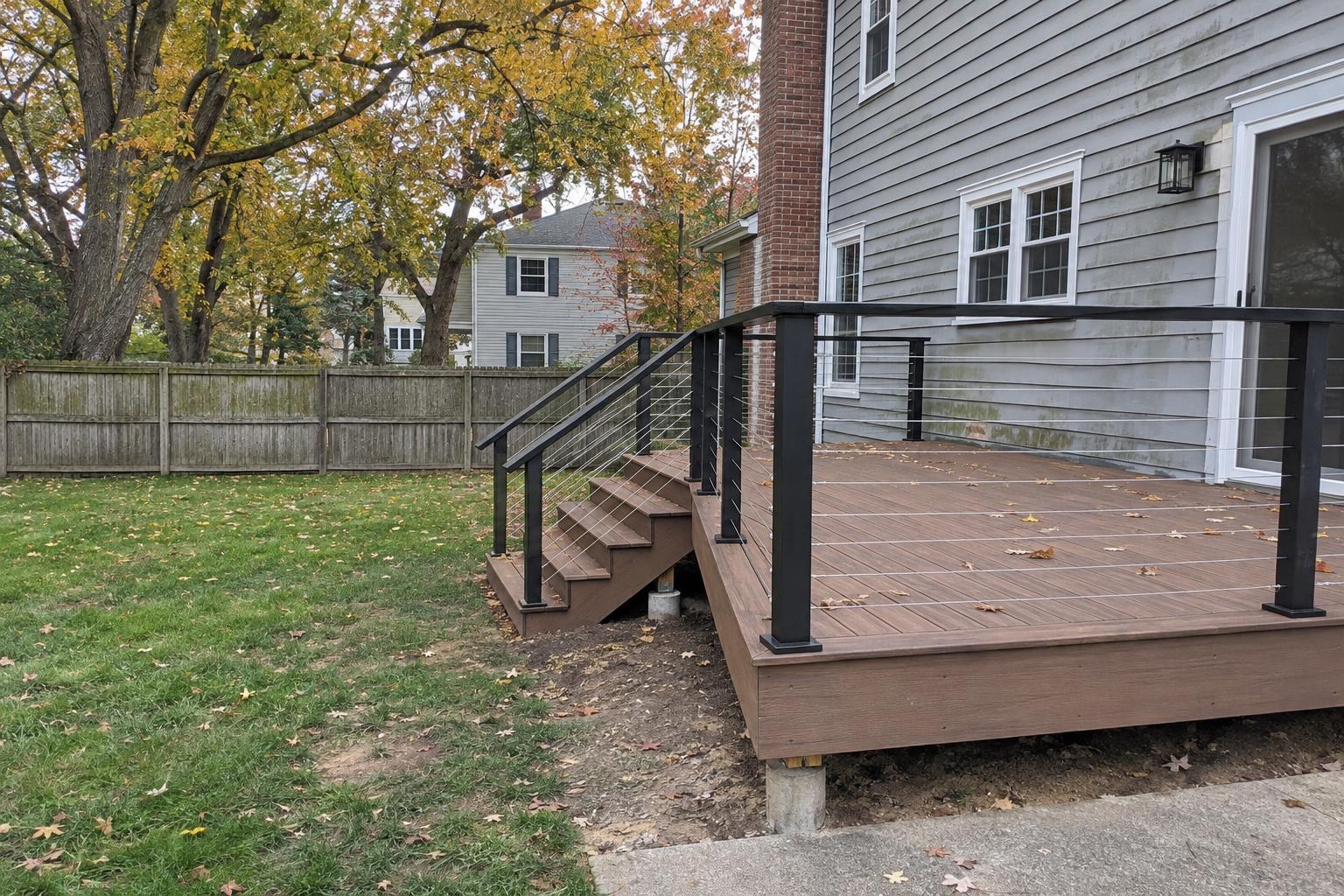
Guard rails need to sit between 36 and 42 inches depending on local code, and balusters have to be spaced so a 4-inch sphere can't pass through. We build rail systems in wood, metal baluster, or cable, and we check the spacing against code before it ever gets inspected. A loose or wobbly railing is one of the most common things we get called out to fix.
If the frame is still solid but the decking boards are cupped, splintered, or just the wrong color, we can strip the old boards and lay new ones on the existing structure. This costs less than a full rebuild, but only works if the joists pass inspection first. We won't resurface over a frame we wouldn't trust for another ten years.
Some decks get a screened section built in, usually over part of the structure, to get a bug-free spot without the cost of a full enclosure. This calls for extra framing for the roof load and a different foundation plan than an open deck. We can build this as part of a new deck or add it onto one we built years ago.
Old decks sometimes aren't worth saving, especially if the ledger board has rotted through or the footings were never set to code. We tear out the structure, haul off the lumber, and check what's behind the ledger on the house itself before anything new goes up. This usually runs a day or two depending on size and whether there's a hot tub or built-in bench to remove first.
Sloped backyards usually call for a deck that steps down in stages instead of one tall platform with a single staircase. Each level needs its own beam and footing layout, and the stairs between them have to meet the same rise-and-run code as any other staircase. These jobs take longer than a single-level deck, mostly because of the extra footings and framing connections.
Four steps, and no surprises in any of them.
You tell us what you want doing, we look at what is actually there, and we ask the awkward questions early.
In writing, itemised, free. If something might add cost later we flag it now rather than at the end.
Same crew throughout. We cover your floors, keep the dust down and tidy up before we leave each day.
You point out anything you are not happy with and we fix it before the invoice, not after.
These are the towns where we pull permits and pour footings regularly.
Questions that come up once a project actually gets started.
Describe the problem and we will tell you what it probably is. No obligation.